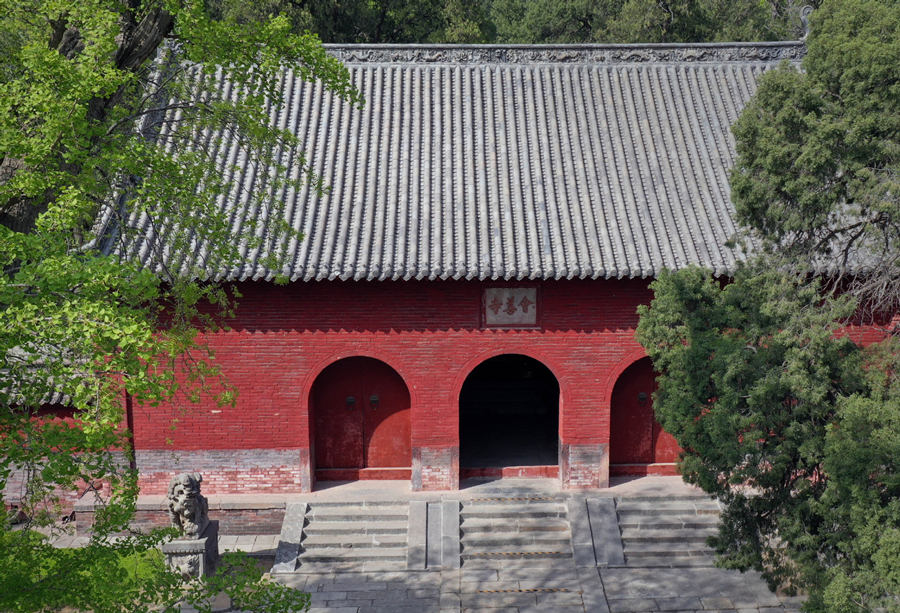
Huishan Temple in Dengfeng, Henan
Introduction
Huishan Temple, located in Dengfeng, Henan province, is one of the historic monuments in the region famously known as "The Centre of Heaven and Earth". This temple, along with other significant sites like the Shaolin Temple and Songyang Academy, is situated around the Songshan Mountain, a region of profound historical and cultural importance in China. As a part of this rich historical tapestry, Huishan Temple stands as a testament to the enduring legacy of Chinese architectural and religious traditions.
History
Huishan Temple's origins are rooted in the depths of ancient Chinese history. Like many other historic sites in the Dengfeng area, it has survived through the ages, weathering the changes brought about by various dynasties. The temple's history is intertwined with the broader narrative of the Songshan Mountain region, which has long been regarded as a spiritual and cultural hub. Over the centuries, Huishan Temple has been a place of worship, learning and reflection, contributing to the cultural and religious fabric of the area. The temple's history reflects the broader cultural dynamics of ancient China, embodying the spiritual and philosophical shifts that have occurred over the millennia.
Architecture
Main Structures
Huishan Temple showcases traditional Chinese architectural styles, characterized by its intricate wooden structures, elegantly sloping roofs, and harmonious integration with the surrounding natural landscape. The main structures of the temple include the central hall, which serves as the focal point for religious and ceremonial activities. This hall is complemented by smaller auxiliary buildings that collectively form a cohesive architectural ensemble. The layout of the temple is designed to enhance the spiritual experience of visitors, guiding them through a journey of contemplation and reverence.
Artistic Elements
The artistic elements of Huishan Temple are a testament to the skilled craftsmanship of ancient Chinese artisans. The temple is adorned with intricate carvings, detailed frescoes and ornate sculptures, each telling a story of its own. These artistic elements not only enhance the aesthetic appeal of the temple but also serve as a medium for conveying religious and philosophical teachings. The preservation of these artistic elements is crucial for maintaining the temple's historical integrity and cultural significance.
Cultural Significance
Huishan Temple holds immense cultural significance, not only as a place of worship but also as a symbol of China's rich cultural heritage. The temple embodies the philosophical and spiritual beliefs that have shaped Chinese society over the centuries. It serves as a focal point for cultural and religious activities, attracting scholars, pilgrims and tourists alike.
As a place of worship, Huishan Temple is a center for various religious practices. These practices reflect the spiritual traditions that have been passed down through generations, providing a space for meditation, prayer and communal gatherings.
Preservation and Restoration
The preservation and restoration of Huishan Temple are critical for ensuring its continued existence for future generations. Efforts to maintain the temple involve meticulous attention to its architectural and artistic elements, safeguarding its historical and cultural integrity. Preservation initiatives are guided by principles that prioritize authenticity and respect for the temple's historical context. These efforts are essential for maintaining the temple's significance as a cultural and religious landmark.








